
CCHO IN THE NEWS

Approaches to housing at heart of SF state senate race
October 10, 2020
“The fundamental flaw of SB 35 was and still is that it makes by right market-rate housing equally apply in at-risk urban communities as it is in suburban communities or in communities where there’s no displacement risk,” said Peter Cohen, CCHO co-director. “Given how critical our coalition’s housing organizations are in working on the ground to provide affordable housing and housing security, and in countering the displacement pressures on communities of color, we expect a close and constructive working relationship with San Francisco’s state senator. The housing urgencies of these times demand it.”

What happens to affordable housing in a market downturn
September 25, 2020
“There’s opportunity to invest in a time of a down market,” said Peter Cohen, co-director for the Council of Community Housing Organizations. “It’s a good time to increase public investment because land is more available. You can buy sites and sometimes buy entitlements. There may be less expensive land or less competition for contractors.”
While the market is experiencing volatility, Cohen said, the affordable housing sector in San Francisco has benefited from steady public investment over the last four decades. The $600 million Proposition A approved by voters last year, for example, is the largest affordable housing bond in city history.
“San Franciscans historically have been very good about public investment in affordable housing,” he said. “That’s our primary flotation device to get through these volatile swings in the private investment cycle. San Francisco has about 30,000 units of permanent affordable housing. If we hardwired ourselves to private real estate, we would not be able to afford to have that many.”
But affordable housing could lose out on units required as part of would-be high-end developments.
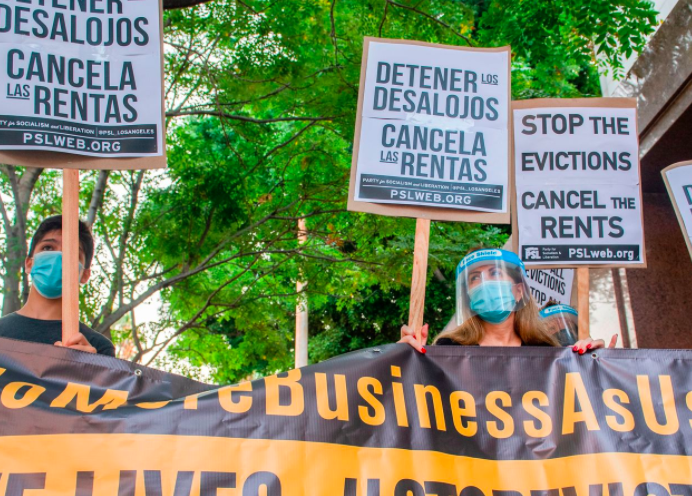
California eviction moratorium is ‘a real nightmare’ for renters to understand — here’s what you need to know
September 3, 2020
“Our members who are developers are working closely with our housing agency about how to reconfigure the reserves we’re required to have while supporting our tenants,” Fernando Martí, co-director of the San Francisco-based Council of Community Housing Organizations, said in an interview. “The way we approach it is we have to figure out how to keep buildings going and keep tenants in place.”
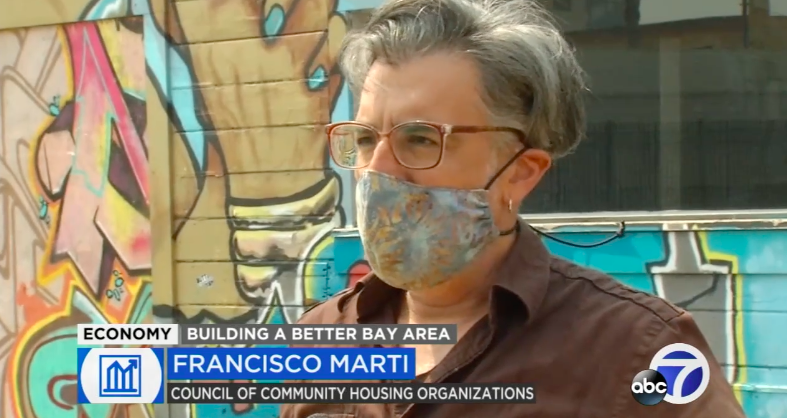
Californians could be evicted if bill is not approved by Sept. 1
August 31, 2020
“The necessity of having to pay 25% of your income works for some people but for other people, it’s impossible” says Fernando Martí, co-director of the Council of Community Housing Organizations. Watch the entire segment here.

Community Op-Ed: In the “new normal,” teachers still need housing. Where will they live?
August 28, 2020
New Op-ed: Thank you to these San Francisco elected leaders for raising up Housing for Educators! While the pandemic rages on, educators are still in dire need of housing and community-based organizations must prioritize providing this affordable housing.

Epic Sacramento showdown over looming eviction tsunami
August 23, 2020
The change [to SB 1085] came in the wake of unanimous opposition to that provision of the bill by the Board of Supervisors, the Council of Community Housing Organizations, and affordable housing advocates citywide.

Tech Giants Aim to Solve West Coast Housing Shortage
July 23, 2020
Big tech loan funds for housing are a good first step, but what's really needed is deep equity investment and a commitment to ongoing revenue sources. “One common approach for large tech companies has been investing in low-cost loans to affordable-housing developers. While that financing is helpful, there is more need for down-payment grants for these projects to cover upfront costs, said Fernando Martí, co-director of the Council of Community Housing Organizations, a coalition of affordable-housing developers and advocates in San Francisco.”

Bay Area needs to build lots of housing to meet state goals — and goals called too low
July 21, 2020
“Peter Cohen, co-director of the Council for Community Housing Organizations, said the RHNA goal should be to promote more housing of all kinds in suburban and smaller cities while focusing on affordable development in cities like San Francisco, Berkeley and Oakland, where many low-income families have been replaced by wealthier professionals.” To learn about the RHNA process and how it will affect Bay Area housing, read more below.

Bill Could Help Keep Some Rentals Affordable
July 16, 2020
“Assembly Bill 1703 would require most owners looking to sell residential rental property to give the property’s tenants, as well as designated groups like nonprofits, the opportunity to make the first offer to purchase. ‘If you mapped where most homes were lost, and who lost them, they were Black and brown communities,’ said Peter Cohen, co-director of the Council of Community Housing Organizations, one of more than 40 groups that sponsored the bill and brought the concept to the state Capitol, where Assemblyman Richard Bloom (D-Santa Monica) wrote and introduced it.”

Planning Commission approves expansion of educator, affordable housing program
July 16, 2020
“Under the changes, the program set forth by last year’s Proposition E will specifically require 10 percent of affordable units built to contain three bedrooms while allowing higher heights and allow smaller lots of as little as 8,000 square feet to be eligible. Prop. E, approved in November with 76 percent of the vote, allows 100 percent affordable housing to be built on public land.”

450,000 new homes for the Bay Area —where will they go, and who will decide?
July 14, 2020
“The COVID crisis has exposed just how critical housing is for our communities. We all should be looking forward to how we build a stronger Bay Area that is just, affordable, and inclusive so we can recover and thrive together.” Read the Op-Ed above on why this big RHNA number matters and where all this housing should go.

Why More Cities Are Hoping to Give Tenants the Chance to Purchase Their Buildings
July 14, 2020
“Laws that give tenants and nonprofits a chance to compete with private investors could be an important tool to stem the tides of eviction, displacement, and gentrification, Fernando Martí says. That’s why groups like CCHO are supporting the introduction of a bill that would implement a statewide Right of First Purchase (similar to TOPA) in California.”

FOR IMMEDIATE RELEASE: ASSEMBLYMEMBER RICHARD BLOOM INTRODUCES AB 1703 – RIGHT TO FIRST OFFER
July 2, 2020
“The result of our current deeply inequitable and broken housing system was made painfully clear in the 2008 foreclosure crisis. It wiped out trillions of dollars of generational wealth, particularly in Black and Latinx communities, and pushed thousands of families out of their homes,” said Peter Cohen, co-director of the Council of Community Housing Organizations in San Francisco.

Advocates urge Santa Clara County to forgive rent as end of eviction moratorium looms
May 21, 2020
“Unless we’re going to be able to forgive these rents, we’re going to be adding to the racial disparities that already exist.”

Uber layoffs, following Lyft, Airbnb, add to SF economic pain
May 6, 2020
On the other hand, the influx of highly paid tech workers into the Bay Area accelerated housing unaffordability, said Peter Cohen, co-director at the Council of Community Housing Organizations, a San Francisco nonprofit.

2008 Was A Disaster. Here’s How California Should Respond to Save Its Affordable Homes
May 5, 2020
We have seen our state and local leaders recognize this through eviction moratoria, mortgage relief, and other critical short-term measures that will keep people housed today. But the long-term choices will be just as critical, especially for communities of color that are bearing the brunt of both the health and displacement impacts. We have the opportunity to not only survive this crisis, but emerge with a more equitable system for all our communities.

What Would It Mean to Cancel Rent?
May 4, 2020
Nonprofit housing development and acquisition “still requires rent, even if set for low incomes,” says Peter Cohen, co-director on the Council of Community Housing Organizations. “It requires having cash flow, reserves, insurance, property management, and tenant relations, etc. That’s what our community housing nonprofits have learned and evolved over the many years. If our north star is a decommodified housing system, effectively social housing in a whole variety of different forms, we want to be responsible about how we maintain and sustain that housing system at scale so it will work in practice. So when our movement puts forth proposals like this, it is important that we differentiate based on how and by whom housing is owned, distinguishing nonprofit from private entities, so we don’t harm our own collective pathway to that north star.”

Nonprofit Housing Providers Face Down COVID-19
April 27, 2020
“We are not aware of concerns by our Council of Community Housing Organizations member organizations about long-term financial impacts from rent drops,” says Maya Chupkov, communications director of Council of Community Housing Organizations, a member organization based in San Francisco.

It's Time to Cancel Rent
April 1, 2020
“The reality we have to face for so many millions of folks across the country is that they are living almost paycheck to paycheck,” says Peter Cohen, co-director of the affordable-housing organization Council of Community Housing Organizations. “They’re kind of at the margins. We’ve all seen the data of how many Americans are ‘rent-burdened’—they’re paying more of their income than they should be—in order to leave enough money for food and medication and other things.”

Wiener tries again with zoning reform bill to require 2 to 4 housing units per parcel
March 9, 2020
“In suburban low-density areas there is basically not the same intense development happening, it's a lot quieter in those places. All the market development activity is for the most part happening in urban core areas, and it's happening on adrenaline — too much too fast — in a lot of urban communities across the state but it's also quite concentrated in gentrifying neighborhoods, which is why we have the displacement crisis.”